Generations of Computers: Complete Guide from Past to Present
Published: 10 Dec 2025
Did you know the first electronic computer took up an entire room and weighed over 27 tons?Computers have come a long way since then, becoming faster, smaller and more powerful.Understanding these changes can be confusing at first.In this guide, you will explore the Generations of Computers step by step and discover how the parts of computer have evolved with each generation.We will look at how each generation improved technology, affected daily life and led to the devices we use today.By the end, you’ll see the journey of computers in a clear and simple way.
What Are Computer Generations?
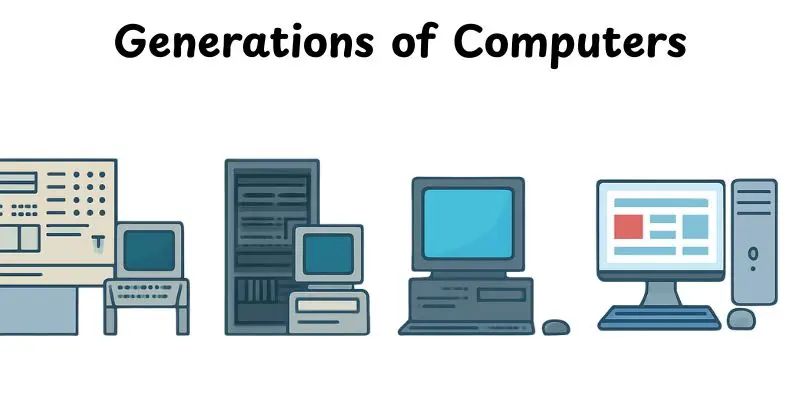
Generations of Computers refers to the way computers are grouped based on major changes in their technology.Each generation shows improvements in speed, size, cost and efficiency.It starts from the earliest computers using basic hardware and moves to modern systems with advanced processing abilities.The changes include new types of components, better memory and improved input/output devices.Learning about these generations helps us understand how computers became faster, smaller and more powerful over time.It also shows the path of innovation that led to today’s smart and connected devices.
Importance of Computer Generations
Generations of computers show how technology has changed over time.Each generation brought new improvements in speed, size and performance.Learning about them helps us understand modern computers better.
- Shows how computers became faster and more powerful.
- Explains the reduction in size and cost over time.
- Helps beginners understand the evolution of technology.
- Highlights improvements in memory and storage systems.
- Demonstrates how modern smart devices developed from early computers.
Detailed Breakdown of Each Generation
In this section, we will explore each generation of computers in detail. You will learn about the technology, features, and examples that define every stage of computer evolution.
First Generation of Computer (Vacuum Tubes)
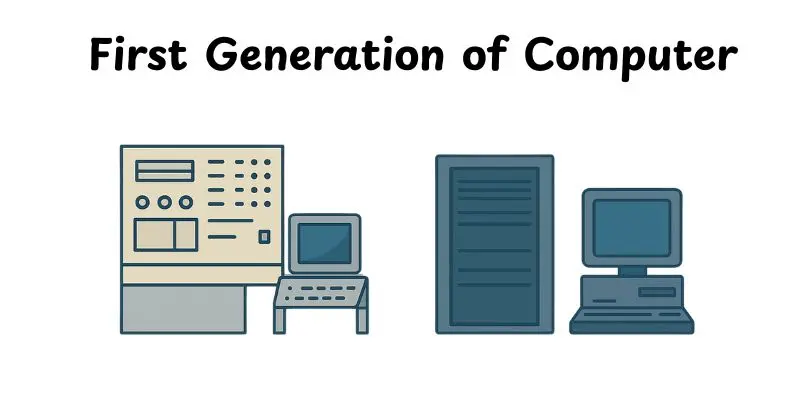
Vacuum tube computers are the earliest type of electronic computers that used vacuum tubes for processing and memory.They relied on large glass tubes to control electrical signals, making them powerful for their time but bulky and energy-consuming.These computers formed the foundation of modern computing by performing calculations electronically instead of mechanically.
Features:
- Very large in size, often occupying entire rooms.
- Consumed a lot of electricity and generated excessive heat.
- Operated using machine language, which required expert programmers.
- Input and output were handled through punched cards and paper tape.
- Slow processing speed compared to later generations.
Examples:
- ENIAC (Electronic Numerical Integrator and Computer)
- UNIVAC I (Universal Automatic Computer I)
- IBM 701
Second Generation (Transistors)
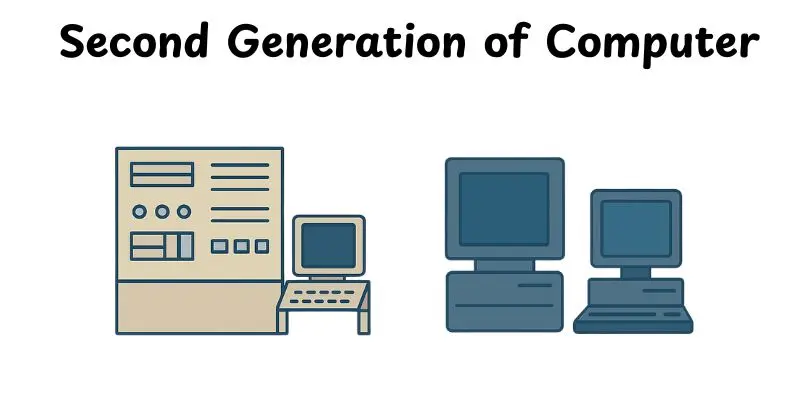
Transistor computers are the second generation of computers that replaced vacuum tubes with transistors for processing and memory.They were smaller, faster and more reliable than first-generation machines.These computers marked a major step toward modern computing by improving efficiency and reducing power consumption.
Features:
- Smaller in size compared to first-generation computers.
- Consumed less electricity and generated less heat.
- Faster processing and more reliable operations.
- Used assembly language and early high-level programming languages like COBOL and FORTRAN.
- Improved storage and input/output devices compared to vacuum tube computers.
Examples:
- IBM 1401
- UNIVAC Solid State
- CDC 1604
Third Generation (Integrated Circuits)
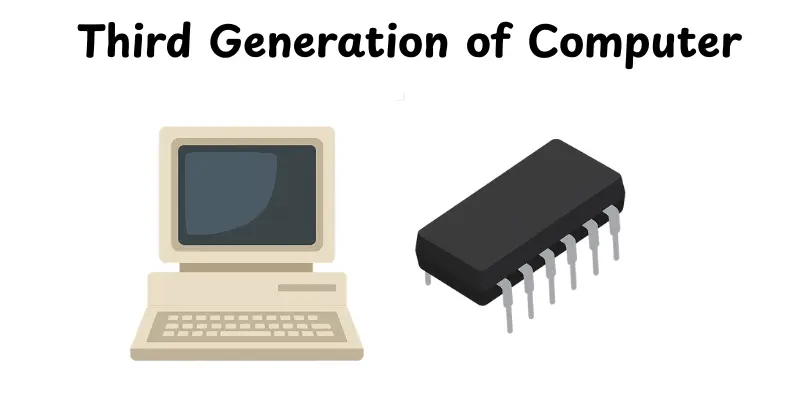
Integrated Circuit (IC) computers are the third generation of computers that used integrated circuits instead of individual transistors.These ICs combined multiple electronic components on a single chip, making computers smaller, faster and more efficient. This generation introduced greater reliability and the use of operating systems for better task management.
Features:
- Smaller in size and more compact than previous generations.
- Faster processing speed and higher reliability.
- Used high-level programming languages like C and BASIC.
- Introduction of operating systems for multitasking.
- Improved input/output and storage devices, making computers more user-friendly.
Examples:
- IBM 360 series
- PDP-8
- UNIVAC 1108
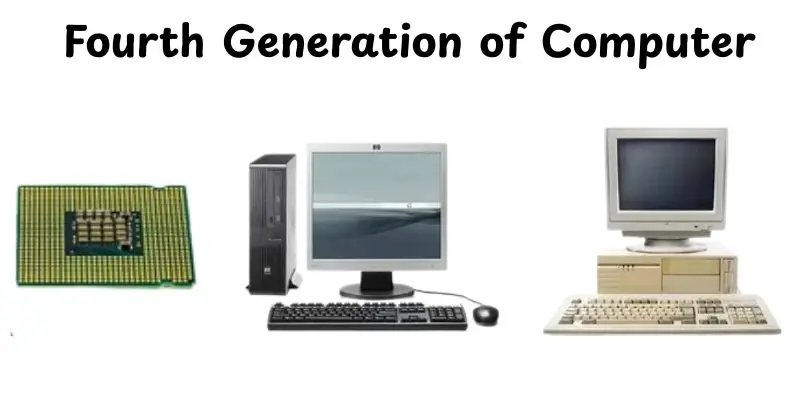
Fourth Generation (Microprocessors / VLSI)
Microprocessor computers are the fourth generation of computers that use microprocessors as their central processing unit.A microprocessor combines the CPU, memory and input/output controls on a single chip, making computers smaller, faster and more powerful.This generation brought personal computers to homes and offices, making computing accessible to everyone.
Features:
- Compact size and lightweight design compared to earlier generations.
- High processing speed and increased reliability.
- Use of Graphical User Interfaces (GUI) for easier interaction.
- Support for modern programming languages and multitasking operating systems.
- Efficient input/output devices and large storage capacity.
Examples:
- Intel 4004 and 8080 microprocessor-based computers
- IBM PC (Personal Computer)
- Apple II
Fifth Generation (AI, Advanced Computing)
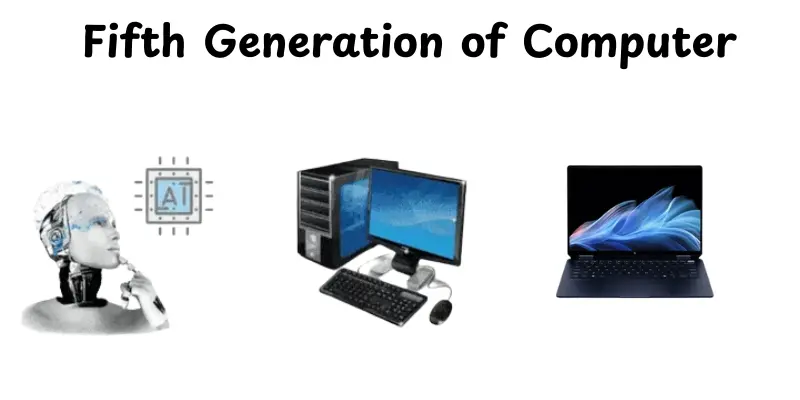
Artificial Intelligence (AI) computers represent the fifth generation of computers, focusing on advanced computing and intelligent systems.These computers are designed to process large amounts of data, learn from it, and make decisions or solve problems like humans. They use technologies such as machine learning, natural language processing and parallel processing to perform complex tasks efficiently.
Features:
- Capable of learning and decision-making through AI and machine learning.
- Use of natural language processing for human-like communication.
- High-speed processing with parallel and supercomputing architectures.
- Integration with smart devices, robotics and modern applications.
- Can handle large databases and perform complex problem-solving.
Examples:
- IBM Watson
- Google DeepMind
- Modern AI-powered supercomputers used in research and robotics
How Computer Generations Changed Daily Life
Computer generations have transformed the way we live, work, and communicate. Each generation introduced improvements that made technology faster, smaller, and more accessible. From large room-sized machines to AI-powered devices, these changes affected every aspect of daily life.
- Education: Computers made learning interactive with online classes, simulations, and digital resources.
- Business: Automation, data management, and faster calculations improved efficiency and decision-making.
- Communication: Email, video calls, and social media became possible as computers evolved.
- Entertainment: Gaming, streaming, and multimedia experiences became more advanced and widespread.
- Healthcare: Computers enabled modern medical equipment, patient record systems, and research tools.
Why Generations Matter
Computer generations are important because they show how technology has evolved over time. Each generation marks significant improvements in speed, size, cost and performance. Understanding these changes helps us appreciate modern devices and predict future trends.
- Tracks technological progress: Shows how computers improved with each generation.
- Helps in learning and research: Makes it easier to understand hardware and software development.
- Guides innovation: Highlights trends that inspire new technologies.
- Simplifies comparison: Allows easy comparison between old and modern computers.
- Supports career growth: Knowledge of generations is useful in education, IT, and technical fields.
Advantages and Disadvantages of Generations of Computers
In this section, we will look at the pros and cons of different computer generations. Understanding these helps us see how technology improved and what challenges existed in each stage.
| Advantages of Generations of Computers |
|---|
|
| Disadvantages of Generations of Computers |
|---|
|
Conclusion
In this article, we explored the Generations of Computers, from the first vacuum tube machines to today’s AI-powered systems.We covered how each generation improved in speed, size, and efficiency and how these changes shaped the way we work, learn and communicate.Guys, understanding these generations is important because it helps you appreciate modern technology and prepares you for the future of computing.Keep exploring, being interested and learning, guys!
FAQs
The fifth generation includes AI computers, supercomputers and smart systems.They focus on learning, problem-solving and handling large amounts of data.
There are five generations of computers so far, starting from vacuum tube machines to today’s AI systems.
We are currently in the fifth generation, which uses advanced computing and artificial intelligence.
Yes, researchers predict a sixth generation may come, using quantum computing and even faster, smarter systems in the future.
AI is linked to the fifth generation because these computers are designed to learn, think and solve problems like humans, unlike earlier computers.

- Be Respectful
- Stay Relevant
- Stay Positive
- True Feedback
- Encourage Discussion
- Avoid Spamming
- No Fake News
- Don't Copy-Paste
- No Personal Attacks
- Be Respectful
- Stay Relevant
- Stay Positive
- True Feedback
- Encourage Discussion
- Avoid Spamming
- No Fake News
- Don't Copy-Paste
- No Personal Attacks
