The Role of Computers in Banking: Key Functions and Advantages
Published: 16 Jan 2026
Have you ever used an ATM or checked your bank balance online? That’s all thanks to computers! The role of computers in banking has completely transformed how we manage our money. Computers have replaced slow, manual processes with fast, digital systems that make banking quicker and more efficient.
Today, they help with secure data storage, facilitate money transfers, and allow us to access online banking services at any time. This shift has made financial services more accessible and less prone to errors. In this guide, we’ll explore how computers are used in banking, their benefits, and why they’re now an essential part of the banking world.
What Are Computers in Banking?
Computers in banking refer to the integration of computer systems and digital technologies to manage financial operations. This includes managing customer accounts, processing transactions, ensuring data security, and enabling seamless online banking services.
Computers enable faster, safer, and more accurate banking services, reducing human error, increasing operational efficiency, and providing customers with 24/7 access to services. From ATM machines to mobile banking, computers are the backbone of these services.
History of Computers in Banking
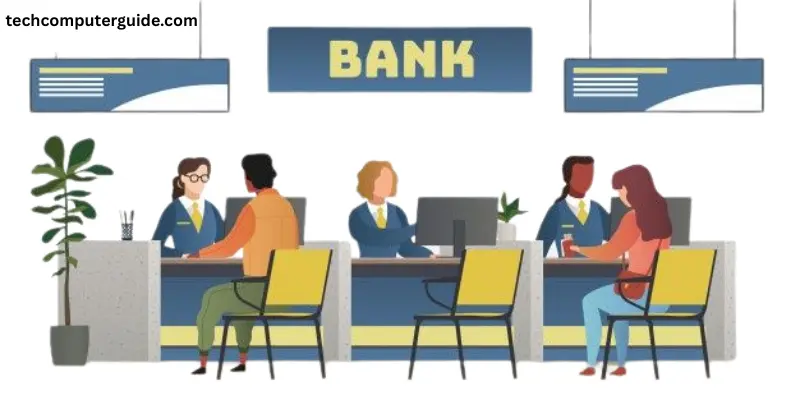
In the early days of banking, everything was done manually. Bank workers recorded customer names, account numbers, and transaction details on paper. This process was slow, prone to errors, and difficult to manage, making it hard for banks to serve large numbers of customers quickly or accurately.
The use of computers in banking began in the 1960s and 1970s, marking the start of a major transformation in the industry. Early computer systems were used to store customer records, making it easier to access and manage data. These computers helped banks move away from paper records, improving efficiency and reducing errors in financial management.
As the decades passed, particularly in the 1980s and 1990s, computers continued to change the way banks operated. With the introduction of computer networks, banks could link multiple branches together, allowing for faster communication and data sharing. During this time, Automated Teller Machines (ATMs) became widely used, giving customers easy access to their accounts 24/7. The rise of online banking also started to take off, enabling customers to conduct banking activities from home or anywhere with internet access.
By the 2000s, the banking industry was nearly fully digital. Computers began to control mobile banking apps, online payments, and internet banking systems. These technological advancements made banking faster, more convenient, and available at any time, allowing customers to manage their finances with just a few clicks or taps. Today, computers continue to play an essential role in the banking sector, shaping the way we bank and interact with financial services.
Importance of Computers in Banking
The role of computers in banking is essential for the smooth operation of modern financial services. They help speed up processes, enhance security, and make banking more convenient for both customers and banks alike.
- Speed and Efficiency:Computers enable banks to process thousands of transactions in real-time, reducing wait times and enhancing operational efficiency.
- Security and Accuracy:Advanced computer systems ensure high levels of data accuracy and protection, minimizing human error and guarding against fraudulent activities.
- 24/7 Banking:With online platforms and ATMs, banks are accessible to customers anytime, anywhere, providing continuous services beyond traditional office hours.
- Paperless Transactions:Computers have eliminated the need for paper-based records, reducing clutter, saving resources, and ensuring a more sustainable and efficient banking environment.
- Customer Convenience:By offering mobile apps and digital banking services, customers enjoy easy access to financial services from their homes or on the go.
Types of Computers Used in Banks
Banks use many types of computers to manage customer data, handle transactions, and ensure smooth operation of services. Each type of computer plays a key role in making banking processes faster, more secure, and more efficient.
Mainframe Computers:
These are used by large banks to process high-volume transactions, manage customer data, and control transaction systems securely.
Mini Computers:
Mini computers handle branch-level operations such as transaction processing and account updates, ensuring localized systems remain effective.
Personal Computers (PCs):
PCs are used by bank employees for daily tasks such as customer service, data entry, and transaction management at teller counters.
ATMs and Self-Service Technology:
ATMs are computer-powered machines allowing customers to perform banking functions like withdrawals, deposits, and balance inquiries without needing bank staff.
Uses of Computers in Banking
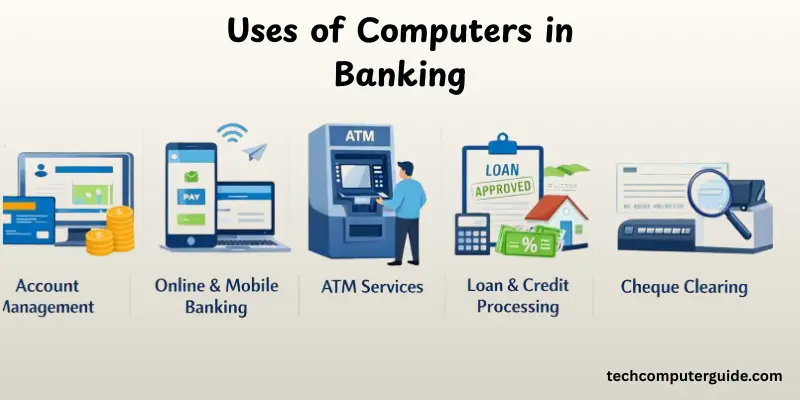
Computers play a useful role in modern banking, helping banks manage a wide range of services efficiently. From processing transactions to providing secure online access, computers make banking faster, safer, and more convenient for both customers and institutions.Here are some application of computer in banking:
- Account Management:Computers automatically update customer accounts, track balances, process deposits, withdrawals, and transactions with precision.
- Online and Mobile Banking:Digital systems allow customers to perform banking tasks such as transferring funds, checking balances, and paying bills anytime, anywhere, with just a few clicks.
- ATM Services:Automated Teller Machines (ATMs) allow customers to access their accounts for 24/7 banking without visiting bank branches.
- Loan and Credit Processing:Computers assist banks in processing loan applications and calculating credit scores, significantly speeding up decision-making.
- Cheque Clearing and MICR Systems:MICR technology scans and processes cheques efficiently, eliminating manual steps and reducing errors in cheque clearing.
- Data Storage and Security:Banks store vast amounts of sensitive customer data on secure computer servers, ensuring that encryption and firewalls protect this data from unauthorized access.
Functions of Computers in Banking
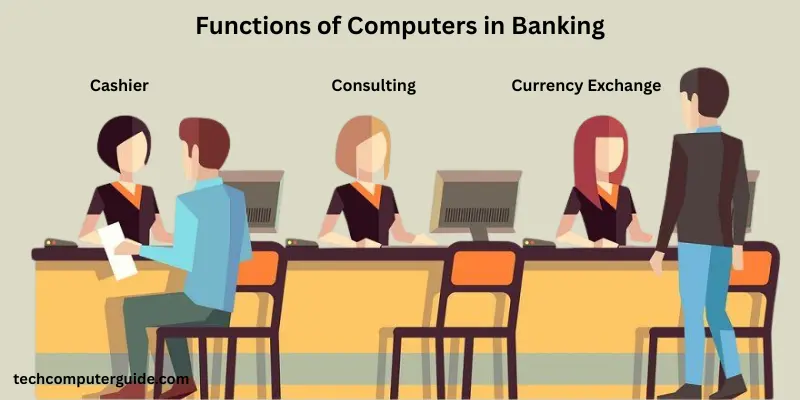
The functions of computers in banking are essential for managing data, processing transactions, and keeping everything secure. These functions help banks operate efficiently, providing faster services while ensuring customer information stays safe.
- Transaction Processing: Computers manage deposits, withdrawals, fund transfers, and payments in real-time, ensuring transactions are quick and accurate.
- Record Keeping: Computers maintain a secure and accurate database of customer information, making it easy for banks to access and update data.
- Communication: Digital systems send automatic alerts, emails, and SMS updates to customers, helping them track their transactions and accounts effortlessly.
- Data Analysis: Computers help banks analyze customer data and market trends, enabling more informed decision-making and financial planning.
- Security: Sophisticated security features such as encryption, firewalls, and multi-factor authentication protect customers’ financial information from cyber threats.
Advantages and Disadvantages of Computers in Banking
Computers in banking offer numerous benefits, making processes faster, more accurate, and accessible. However, they also present challenges such as security risks and dependency on technology that need to be carefully managed.
| Advantages of Computer in Banking |
|---|
|
| Disadvantages of Computers in Banking |
|---|
|
Future Trends of Computers in Banking
The future of computers in banking holds exciting potential, with advancements promising even greater speed, security, and efficiency. As technology evolves, banking services will continue to become smarter and more accessible for everyone.
- AI and Machine Learning:Artificial Intelligence (AI) will play a larger role in fraud detection, customer service (through chatbots), and personalized banking experiences.
- Blockchain and Digital Currencies:Blockchain technology will revolutionize banking by providing secure, transparent, and decentralized transaction systems. Cryptocurrencies may become more widely adopted in mainstream banking.
- Cloud Computing:Cloud storage solutions will become more common in banks, allowing them to scale operations and improve data processing capabilities without significant infrastructure investment.
- Smart Banking Devices:Biometric systems, smart cards, and Internet of Things (IoT)-enabled devices will offer even safer, faster, and more personalized banking services.
Role of the Computer in Online Banking
Computers play a crucial role in making online banking services fast, safe, and accessible anytime and anywhere. They power the systems that allow customers to manage their finances digitally.
- Internet Banking: Computers enable customers to perform banking tasks like checking balances, transferring funds, and downloading account statements online, all with a few clicks.
- Mobile Banking: Smartphones act as mini-computers, providing instant access to bank accounts. Users can send money and pay bills through banking apps at their convenience.
- Digital Payment Systems: UPI, PayPal, debit, and credit card transactions rely on powerful computer systems to process payments securely and quickly across the globe.
- Security in Online Banking: Computers use encryption, one-time passwords (OTPs), and secure servers to protect banking data, ensuring online transactions are safe from fraud and hackers.
Real-Life Examples of Computer Use in Banking
Computers play a crucial role in the banking world, helping banks manage a wide range of services efficiently. Real-life examples of computer use in banking highlight how technology makes transactions faster, safer, and more accessible for everyone.
- ATMs and Self-Servicing Machines:
Machines like ATMs and kiosks are computer-based, allowing customers to access their accounts without needing to visit a branch. - Online and Mobile Banking:
Banks like Wells Fargo, Bank of America, and PayPal offer comprehensive online and mobile banking platforms powered by computer technology for seamless transactions. - Automated Loan Processing:
Lending institutions use computer algorithms to analyze loan applications, credit histories, and risk factors, approving loans faster than traditional methods.
Conclusion
Computers have greatly changed the banking world, making it easier for banks to do their work and for customers to manage their money. They help banks keep track of accounts, store data safely, and complete transactions quickly and accurately. Thanks to computers, banking is now faster, safer, and easier for everyone to use.
Today, all banks depend on computers to help things run smoothly. Computers save time, reduce mistakes, and make it simpler for customers to access services.What used to be a slow and difficult process is now quick and simple, all thanks to computers. They help connect people to banking services with just a click.
FAQs
These are some asked questions about my computers in banking:
Computers are used in banking for managing accounts, processing transactions, securing customer data, and enabling online banking services.
Banks use various computers, including mainframe computers for central data processing, personal computers for employee workstations, and specialized machines like ATMs for self-service banking.
Banking in computers refers to the use of computer systems to manage financial transactions, store customer data, and offer online services like mobile banking and ATMs.
Computers handle everything from account management and transaction processing to data storage and security, ensuring smooth and secure banking operations.
Computers make banking faster, safer, and more efficient by automating processes, reducing errors, and providing real-time access to services.
Yes, with proper security measures like encryption and multi-factor authentication, it is safe to do banking on a computer.
Computers in banks are used to manage customer accounts, process transactions, and store data securely. They help with tasks like withdrawing money from ATMs, transferring funds online, and processing loans. Computers also ensure that banking systems run smoothly and efficiently.
PC Bank, or ‘People’s Choice Bank,’ is a bank in some regions, though it may vary depending on the country. Generally, it refers to smaller or regional banks that focus on personal banking services.



- Be Respectful
- Stay Relevant
- Stay Positive
- True Feedback
- Encourage Discussion
- Avoid Spamming
- No Fake News
- Don't Copy-Paste
- No Personal Attacks
- Be Respectful
- Stay Relevant
- Stay Positive
- True Feedback
- Encourage Discussion
- Avoid Spamming
- No Fake News
- Don't Copy-Paste
- No Personal Attacks
