What Is a Digital Computer? Powerful Concepts in Simple Words
Published: 19 Dec 2025
Digital computers power almost every modern technology, from smartphones and laptops to banking systems, hospitals and space research.In this guide, we will explore how these systems work behind the scenes, why they are so reliable and how they have become essential in daily life and advanced industries. You will learn about their key components, working process, major types, real-world applications, advantages, limitations and future trends, all explained in a clear and practical way for both beginners and experienced readers.
What is Digital Computer?
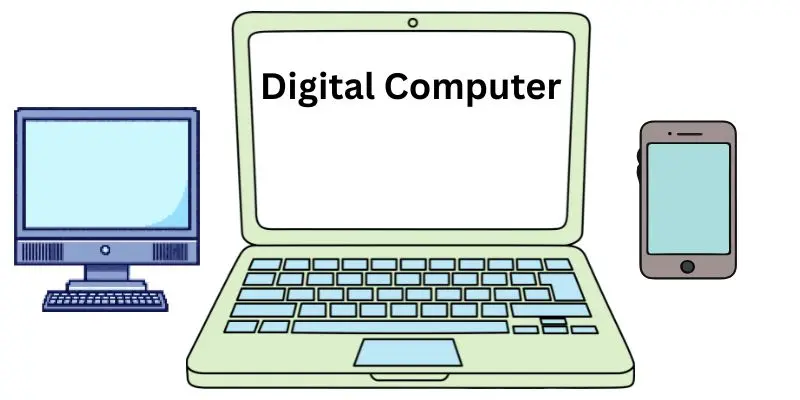
A digital computer is a type of computer that works with data in the form of numbers and symbols. It uses electrical signals to represent information as fixed values, which allows it to process data with high accuracy. These systems follow a set of instructions to perform calculations, make decisions, and produce results. The term stands for a computing system that relies on discrete values rather than continuous physical measurements. Because of this approach, the results are consistent and easy to store, copy and share.This makes digital computers suitable for everyday tasks as well as complex problem solving.
History and Evolution of Digital Computers
The history of digital computers began with early electronic machines designed to handle calculations using binary values. These first systems appeared in the mid-20th century and relied on vacuum tubes, which made them large, costly, and difficult to maintain. Despite their limitations, they proved that electronic data processing could deliver faster and more accurate results than manual methods. This period laid the foundation for programmable machines and modern computing concepts.
The evolution of digital computers accelerated with the introduction of transistors and later integrated circuits, which greatly improved speed, size, and reliability. These advances made computers more accessible and led to the development of personal computers and portable devices. Over time, digital computers expanded beyond desktops into mobile devices, cloud platforms, and embedded systems. Today, they continue to evolve through improvements in processing power, connectivity, and intelligent software.
Main Components of a Digital Computer
A digital computer is made up of several key components that work together to process data and produce results. Each component has a specific role, and understanding them makes it easier to see how the whole system functions. Below are the main components explained in simple terms.
Input Unit
The input unit is used to enter data and instructions into the computer. Common input devices include the keyboard, mouse, touchscreen, and scanners. This unit helps the computer receive information from the user or the environment.
Central Processing Unit (CPU)
The CPU is the core part of the computer where all processing takes place. It controls operations and performs calculations and decisions. The CPU ensures that instructions are carried out in the correct order and at high speed.
Memory and Storage
Memory is used to store data and instructions temporarily while the computer is working. Storage devices keep data for long-term use, even when the computer is turned off. Both are essential for smooth and efficient operation.
Output Unit
The output unit presents the processed information to the user. Devices like monitors, printers, and speakers display or deliver the final results. This component allows users to see, hear, or use the output generated by the computer.
How a Digital Computer Works
A digital computer works by following a clear sequence of steps to turn input data into useful results. It processes information using electrical signals and stored instructions. Each step depends on the previous one to ensure accurate output.
- Input is provided through devices like a keyboard, mouse, or sensors.
- The input data is converted into a form the computer can understand.
- Instructions are fetched from memory to guide the processing task.
- The processor performs calculations and logical operations on the data.
- Temporary results are stored in memory during processing.
- Final results are saved or sent to output devices like a screen or printer.
Types of Digital Computers
Digital computers come in different forms based on their size, power, and purpose. Each type is built to handle specific kinds of work, from everyday tasks to complex processing. Below are the main types explained in simple language.
- Personal Computer:Used by individuals for daily activities such as studying, office work, and browsing.
- Mobile Computer:Portable devices like smartphones and tablets that allow computing on the move.
- Workstation:A powerful computer designed for professional tasks like design and data analysis.
- Server:A computer that stores data and provides services to multiple users at the same time.
- Embedded Computer:A small computer built into machines to control specific functions.
- Supercomputer:A highly powerful system used for advanced research and complex calculations.
Features and Characteristics of Digital Computers
Digital computers have specific features that make them reliable and widely used in everyday life and advanced systems. These characteristics help them perform tasks quickly, accurately, and in an organized way. Below are the main features explained in simple terms.
- High accuracy:Digital computers produce precise results because they work with fixed values.
- Fast processing speed:They can perform millions of operations in a very short time.
- Automatic operation:Once instructions are given, tasks are completed without repeated user input.
- Large storage capacity:They can store huge amounts of data for short-term and long-term use.
- Consistency and reliability:The same input always produces the same output under normal conditions.
- Programmable nature:They can be used for different tasks by changing the instructions.
- Easy data handling:Information can be stored, copied, and shared without loss of quality.
Applications of Digital Computers
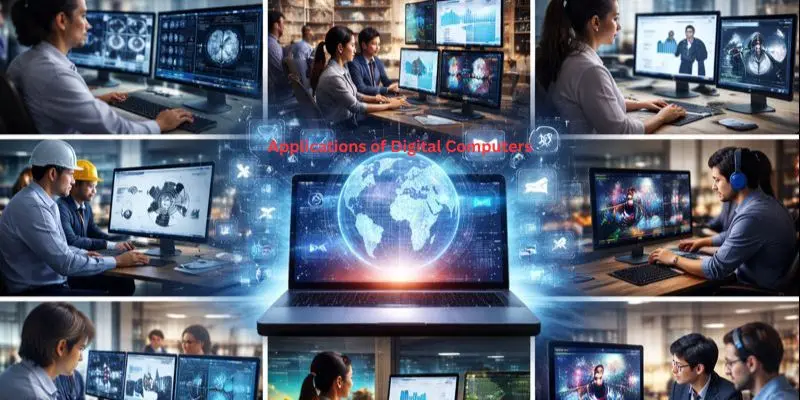
Digital computers are used in almost every area of modern life. They help people work faster, store information, and solve complex problems with ease. Their flexibility allows them to support both simple daily tasks and advanced systems.
- Education:Used for learning, research, online classes, and exams.
- Business and Office Work:Helps manage data, accounts, reports, and communication.
- Healthcare:Used for patient records, medical tests, and treatment planning.
- Banking and Finance:Supports transactions, online banking, and financial analysis.
- Communication:Enables email, video calls, and social media platforms.
- Science and Research:Used for simulations, calculations, and data analysis.
- Engineering and Design:Helps create designs, models, and technical plans.
- Entertainment:Used for gaming, movies, music, and digital content creation.
- Transportation:Supports navigation systems, traffic control, and vehicle management.
- Government and Public Services:Used for record keeping, data management, and public administration.
Advantages and Disadvantages of Digital Computer
In this section, we will look at the pros and cons of using digital computers. While they offer many benefits in daily and professional use, they also come with certain limitations. Understanding both helps in using them more effectively.
| Advantages of Digital Computer |
|---|
|
| Disadvantages of Digital Computer |
|---|
|
Digital Computers in Modern Technology
Digital computers play a central role in shaping modern technology and everyday life. They act as the backbone of systems that power communication, automation, and data-driven decision making. Almost every smart device or service today depends on digital computing in some form.
They are widely used in cloud computing to store and process large amounts of data over the internet. Digital computers also support artificial intelligence systems that analyze information and improve performance over time. In smart homes, vehicles, and wearable devices, embedded digital computers control functions and respond to user actions. From online services to advanced industrial systems, digital computers continue to drive innovation and efficiency in modern technology.
Future of Digital Computers
The future of digital computers is centered on improved performance, efficiency, and smarter capabilities. Ongoing advancements will continue to change how computers are used in daily life and advanced systems.
- Faster processing with improved chip technology
- Better energy efficiency and lower power usage
- Stronger integration with artificial intelligence systems
- Increased use of cloud and edge computing
- Smaller and more powerful devices
- Improved data security and privacy measures
- Support for advanced research and innovation
Conclusion
In this guide, we covered the digital computer from its background and working process to its main components, types, features, applications, and future direction. You now have a clear picture of how these systems support daily tasks as well as advanced technologies. In my view, understanding this topic is important for everyone, whether you are a student, a professional, or just curious about how technology works. So guys, keep learning, stay curious, and stay tuned for more helpful guides ahead.
FAQs
Examples include desktop computers, laptops, smartphones, tablets, and servers. All of these devices process data digitally. They are commonly used in homes, offices, and industries.
The four main types are personal computers, workstations, servers, and supercomputers. Each type is designed for different levels of performance and tasks. Their use depends on the size and complexity of the work.
An analog computer works with continuous values like speed or temperature. A digital computer works with fixed values such as numbers. Digital computers are more accurate and easier to store data in.
Yes, a smartphone is a digital computer. It processes data, runs programs, and stores information just like a computer. It is simply smaller and more portable.
Binary is used because electronic circuits easily understand two states, on and off. These two states match the values 0 and 1. This makes data processing reliable and simple.
Digital computers do not make mistakes on their own. Errors usually happen due to wrong input, faulty programs, or hardware problems. When instructions are correct, results are accurate.
Digital computers are not replacing humans but helping them work faster and better. They handle repetitive tasks while humans focus on creativity and decisions. Both work best when used together.

- Be Respectful
- Stay Relevant
- Stay Positive
- True Feedback
- Encourage Discussion
- Avoid Spamming
- No Fake News
- Don't Copy-Paste
- No Personal Attacks
- Be Respectful
- Stay Relevant
- Stay Positive
- True Feedback
- Encourage Discussion
- Avoid Spamming
- No Fake News
- Don't Copy-Paste
- No Personal Attacks
