What is Active Matrix OLED? Key Facts You Should Know
Published: 19 Nov 2025
Ever wondered why certain screens show clear while others feel dull and slow? It can be confusing when each device claims to have the “best display.” Don’t worry, this guide will explain everything step by step. We’ll explain how Active Matrix OLED works, why it’s popular, where you can find it and how it differs from other display types. By the end, you’ll understand what is important when selecting a device with this screen technology.
What Is Active Matrix OLED?
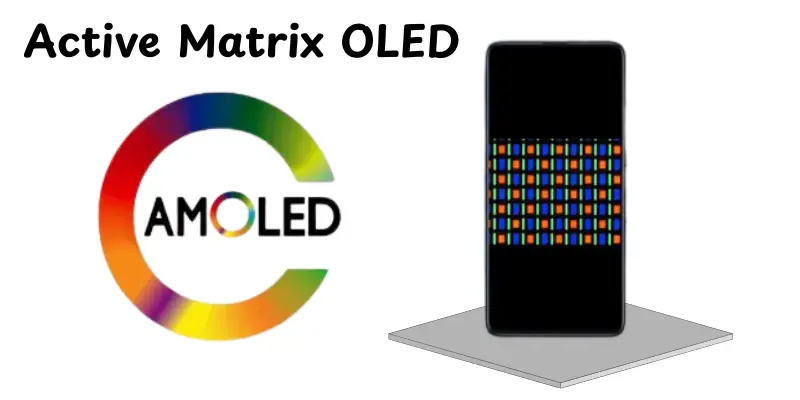
Active Matrix OLED is a type of monitor stands for Active Matrix Organic Light Emitting Diode. It is a display technology that uses small organic materials to produce light when electricity passes through them.There is no need for a backlight because each pixel lights up automatically. A small film transistor controls every pixel, which makes the screen fast and smooth.The colors look colorful and deep because each pixel can turn on and off by itself.It also saves electricity because only active pixels use energy. This makes the display look clear, sharp and easy on the eyes. You see this technology in phones, TVs, smartwatches and many modern screens.
How Active Matrix OLED Works
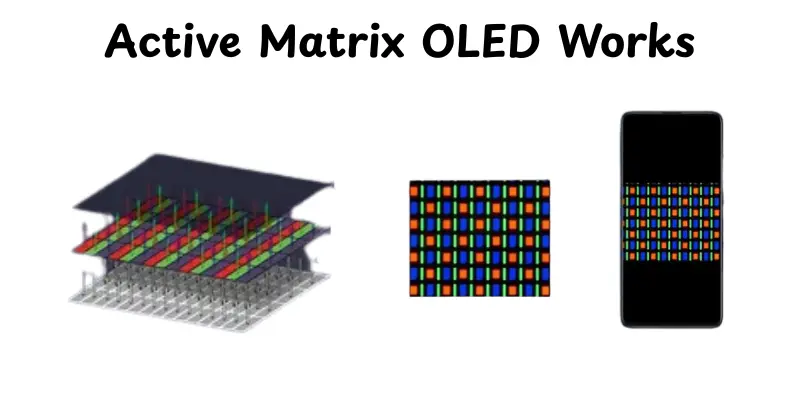
Active Matrix OLED can look difficult at first, but the process is easy to understand when broken down into basic parts. Each pixel generates its own light, with a small control system choosing how bright or dark it should be. Here’s how the whole system works in a clear and simple way.
- Each pixel has organic materials that light up when electricity passes through them.
- A thin film transistor (TFT) controls every single pixel separately.
- The TFT sends quick signals to turn pixels on or off as needed.
- Each bright pixel produces color based on the material used (red, green, or blue).
- Because pixels light up separately, the screen creates deep blacks and bright colors.
- The display updates very fast since every pixel has its own controller.
- Only the active pixels use power, which helps save battery on devices.
Key Features of Active Matrix OLED Displays
Active Matrix OLED displays have multiple attractive features that make them popular in modern panels. These features contribute to cleaner vision, faster reaction, and improved power control. Here are the important points described in a simple way.
- High contrast levels because each pixel can turn completely off.
- Fast response time that makes motion look smooth and clean.
- Wide viewing angles with colors staying accurate from different sides.
- Bright and vibrant colors created by self-lit organic materials.
- Thin and lightweight design since no backlight is needed.
- Better power efficiency because only active pixels use energy.
- Flexible display options for curved, foldable or bendable screens.
- Improved image quality with sharp details and deep blacks.
Types of AMOLED Panels
Active Matrix OLED displays are available in many different types of layouts, each designed to a particular use. These types of materials help makers in producing brighter, more flexible, and longer displays. Here are the main types explained in a simple way.
- Rigid AMOLED – Built on a hard glass base, mainly used in smartphones and TVs.
- Flexible AMOLED – Made on a plastic base, allowing curved and bendable screens.
- Foldable AMOLED – Designed to open and close like a book without damaging the screen.
- Transparent AMOLED – Lets you look through the display while continuing to show graphics.
- Top-emitting AMOLED – Delivers brighter output by emitting light from the top layer.
Uses of Active Matrix OLED
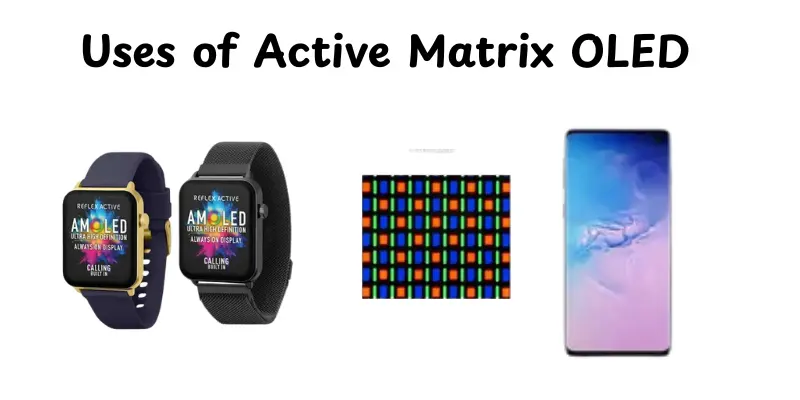
Active Matrix OLED displays are commonly found in modern technology due to bright colors, fast response time and slim design. The flexibility and low energy use make them a popular choice for both small and big screens. Here are their main uses, explained simply.
- Smartphones – Used for sharp, colorful screens with smooth motion.
- Smartwatches – Provides clear visuals while saving battery life.
- Tablets – Offers bright images and wide viewing angles for everyday use.
- Televisions – Delivers deep blacks and vibrant colors for high-quality viewing.
- Laptops – Gives slim designs and strong picture quality for work or entertainment.
- VR Headsets – Supports fast refresh and low blur for a more natural visual experience.
- Automotive Displays – Used in dashboards and infotainment screens for better clarity.
- Wearable Devices – Fits curved or flexible shapes without losing quality.
Advantages and Disadvantages of Active Matrix OLED
In this section, we will look at the pros and cons of Active Matrix OLED displays. This will help you understand where they shine and where they can fall short. The points are simple so beginners and experts can follow easily.
| Advantages of Active Matrix OLED |
|---|
|
| Disadvantages of Active Matrix OLED |
|---|
|
Latest Trends in AMOLED Technology
AMOLED technology grows as companies work for better images, longer lifespans and smarter performance. New trends aim to make displays brighter, smaller, more flexible and efficient for daily usage. Here are the most recent innovations impacting the future of AMOLED panels.
- Foldable and Rollable Screens: Used in modern phones and tablets for flexible designs that bend or fold without damage.
- Higher Refresh Rates: New AMOLED panels support 120Hz and 144Hz for smoother motion in gaming and fast scrolling.
- Better Power Efficiency: Advanced materials help reduce energy use, especially in dark mode.
- Improved Burn-In Protection: New pixel-shift and brightness-control methods help protect screens from permanent marks.
- Ultra-Thin and Lightweight Panels: Used in slim phones, wearables and next-gen TVs.
- Higher Brightness Levels: New AMOLED models reach higher peak brightness for outdoor visibility and HDR content.
- On-Display Sensors: Fingerprint scanners and health sensors are now built directly into the AMOLED layer.
- Longer Lifespan Materials: New organic compounds help pixels last longer without losing color quality.
Future of Active Matrix OLED
Active Matrix OLED (AMOLED) technology is continuously advancing, offering even higher-quality displays in the next few years. Manufacturers are focused on brighter displays, higher energy efficiency and more adaptable designs. New advances appear to make screens smaller, more durable and capable of producing richer colors with more brightness.
- Flexible and Foldable Screens – Expect more smartphones, tablets and wearables with bendable or foldable AMOLED panels.
- Higher Refresh Rates and Resolution – Gaming and media consumption will benefit from ultra-smooth visuals and sharper images.
- Better Power Efficiency –Advanced pixel-driving techniques will decrease battery drain while maintaining screen brightness.
- Enhanced Durability – New materials will make AMOLED panels more resistant to scratches and burn-in.
- Wider Adoption in Devices – Beyond phones and TVs, expect AMOLED in laptops, AR/VR headsets and automotive displays.
- Improved Color Accuracy – Displays will show more lifelike colors, benefiting designers and content creators.
Conclusion
So, in this article, we explored Active Matrix OLED in detail. We analyzed how it works, its main features, uses, benefits and drawbacks. If you want an electronic device with a bright, clean and energy-efficient display, I strongly recommend AMOLED technology. Its rich colors and quick reaction make it perfect for multimedia, gaming and everyday use. Keep an eye on the latest developments, as flexible and foldable screens become more common. AMOLED technology makes for a future-proof experience. So, guys, explore the options and enjoy the greatest display technology available today!
FAQs
An Active Matrix OLED display is a type of screen that uses small LEDs to produce brilliant, colorful images. Each pixel has its own transistor, resulting in quicker reaction and more control. This improves the screen’s sharpness and efficiency compared to earlier display types.
Active Matrix OLED has a built-in transistor for each pixel, but normal OLED has a simpler arrangement. This means AMOLED panels respond faster and display smoother motion. They also handle bigger screens more well without losing brightness.
These displays are often used in smartphones, tablets, televisions and wearable devices. They’re perfect for gaming, streaming videos and any other media that requires bright colors. Many high-end products use them to provide clearer, more energy-efficient screens.
AMOLED panels give bright colors, deep blacks and quick reaction times. They use less electricity on darker displays and offer slimmer, more flexible designs. This reduces device cost and improves its physical appeal.
AMOLED displays can be more costly than regular LCDs. Some colors may fade more over time and really brilliant images can need more battery power. But the advantages usually exceed these small issues.




- Be Respectful
- Stay Relevant
- Stay Positive
- True Feedback
- Encourage Discussion
- Avoid Spamming
- No Fake News
- Don't Copy-Paste
- No Personal Attacks
- Be Respectful
- Stay Relevant
- Stay Positive
- True Feedback
- Encourage Discussion
- Avoid Spamming
- No Fake News
- Don't Copy-Paste
- No Personal Attacks
